Matrilineal descent
The Second SexMatrilineal descent is a system in which children belong to their mother’s clan and communal rights, including access to land, pass through women. In its account of early societies, the book treats this arrangement as a consequential form of lineage and property transmission, while warning that it does not by itself establish women’s political independence or equality with men.
Kinship and transmission
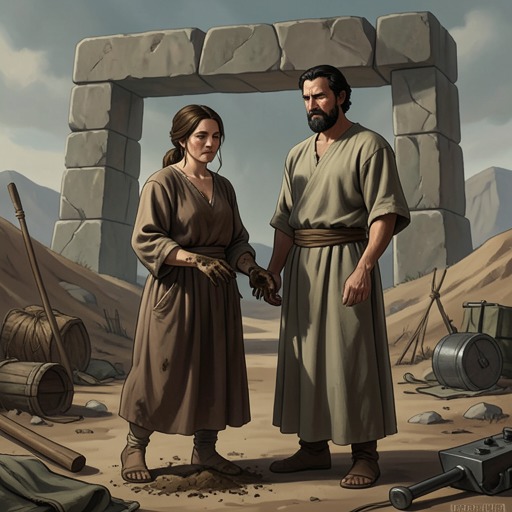
The system rests in part on beliefs about conception that do not assign the father a recognized role. Some peoples described children as ancestral spirits entering a woman’s body from sacred places; in other accounts, entry was thought to occur through the mouth or nostrils. Because defloration was secondary in these explanations, it was rarely treated as a husband’s prerogative. The mother, by contrast, was visibly necessary: she carried and nourished the child, through whom the clan continued. Children in such societies often belonged to their mother’s clan, bore her name, and shared its rights, particularly the use of clan land. Communal property was thus transmitted through women: the fields and their harvests were reserved for clan members through maternal descent, and a person’s connection to a particular piece of land was determined through the mother. The text describes this tie as more than ordinary ownership, associating women with the land’s continuing fertility and the clan’s persistence across generations.
Land, agriculture, and maternal symbolism
The book connects the importance of maternal lineage to the shift from nomadic life toward settled agriculture. A community rooted in land could imagine itself extending beyond the present, surviving through descendants who would inherit and cultivate what came before them. In this setting, the visible role of women in bearing children and beliefs about fertility in the earth reinforced one another: nature appeared maternal, and both women and fields were associated with the renewal of life. This association also shaped labor. Women’s presumed power to bring forth children and crops was interpreted as a kind of magical mediation rather than creative action. In small settlements, cultivating modest gardens and performing domestic work could therefore be assigned to women, while motherhood encouraged a sedentary life. The account presents these arrangements as a mixture of material circumstances and mystical beliefs, not as evidence of an unchanging feminine essence.
Descent is not sovereignty
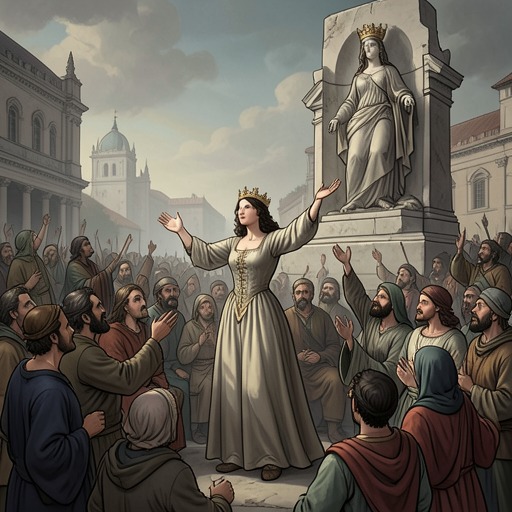
The existence of matrilineal descent does not, in the book’s analysis, determine women’s concrete condition. Across patrilineal, matrilineal, bilateral, and less clearly differentiated systems, women remain under men’s guardianship. A woman might be subject to her father or eldest brother, or to her husband after marriage; under matrilineal descent, male authority could extend through the woman’s father or brother into her husband’s community. Women might mediate the rules of lineage without possessing the authority that made those rules. Nor does a woman chief or queen prove that women as a group hold sovereignty. The text contrasts a woman’s prominence at the head of a society with the continued subjection of ordinary women, and notes that women usually moved to live under their husbands’ roofs. Patrilocal residence, rather than the formal line of descent alone, is presented as a persistent sign of asymmetry between the sexes. Where a mother’s clan claims the children but a husband feeds and raises them, kinship, residence, labor, and everyday authority can pull in different directions.
Historical meaning and limits
Matrilineal descent can preserve a substantial role for women in the transmission of land and clan identity without making women an autonomous political group. The book rejects the inference that maternal rights establish a former golden age of female rule: women’s symbolic association with Earth, Mother, or Goddess did not make them men’s peers or grant them reciprocal authority. The distinction is central to its account of women as the Other: status within a lineage system is not the same as power to define or govern that system. The subject therefore serves as a historical counterexample to explanations that treat women’s position as a direct consequence of biology or a single kind of inheritance. Lineage rules matter, but they do not alone settle who exercises authority, where a woman lives, or who controls her children’s daily circumstances. The account instead situates matrilineal descent within changing material and social arrangements, and distinguishes women’s recognized role in continuity from freedom and sovereignty.